


Breastfeeding Positions for C-Section Moms That Reduce Pain
Jan 09, 2026
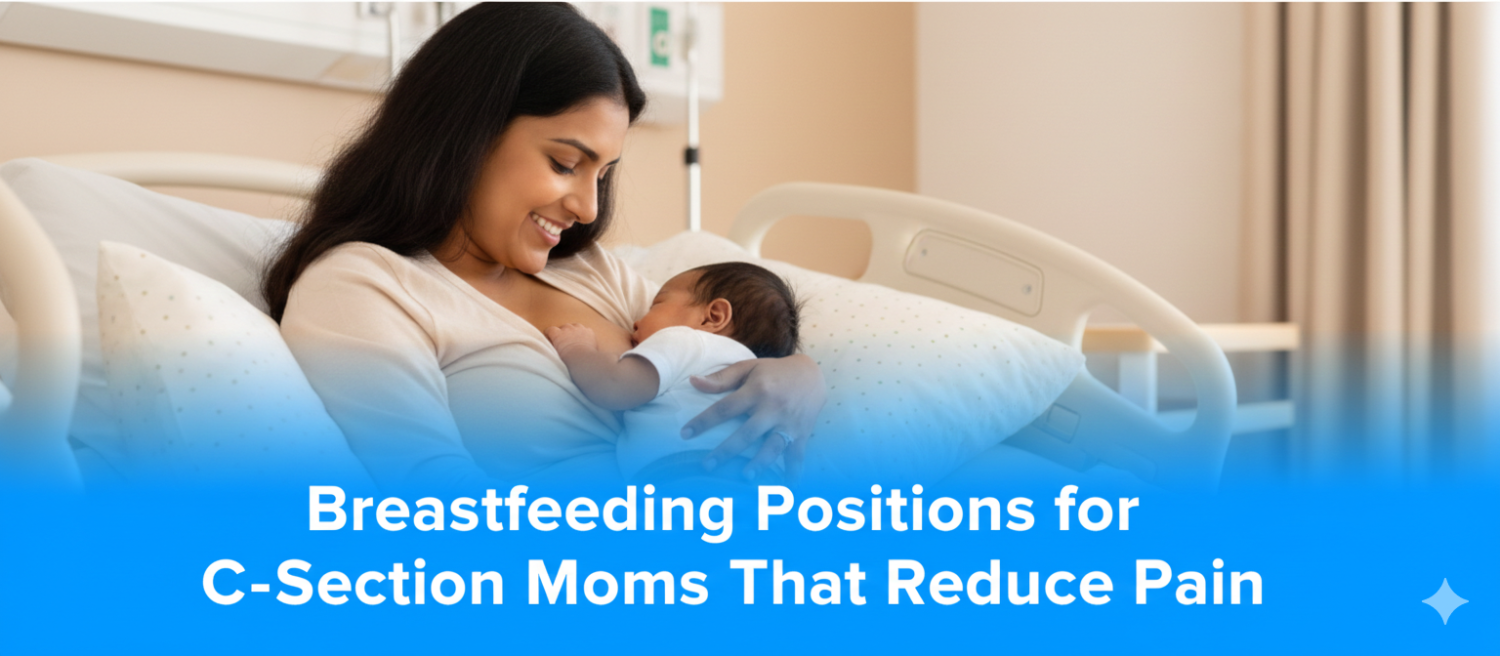
Breastfeeding after a C-section can feel physically and emotionally challenging. In particular when you’re recovering from abdominal surgery while learning to nurse your newborn. Incision pain, stiffness, and limited movement often make even simple feeding positions uncomfortable. This is why positioning matters far more after a C-section than after a vaginal birth. The right breastfeeding position can protect your stitches, reduce pressure on your abdomen, and help your baby latch more effectively. With proper support and posture, breastfeeding can become safer, more comfortable, and less stressful. Thus allowing you to focus on bonding with your baby while your body heals.
Why is Breastfeeding Painful After a C-Section?
Breastfeeding pain after a C-section is usually linked to surgical recovery rather than the act of nursing itself. The incision area is sensitive, and placing a baby’s weight on the abdomen can cause significant discomfort. Limited mobility and weakened core muscles also make it harder to sit upright or hold positions for long periods. Additionally, anesthesia and post-surgery medications may temporarily delay milk flow, leading to longer feeds and sore nipples. These combined factors make comfortable positioning essential for reducing pain and supporting a smoother breastfeeding experience.
Best Breastfeeding Positions After a C-Section
Gentle, supportive positions help reduce incision pain, improve latch quality, and make feeding more comfortable during recovery.
1. Football (Clutch) Hold
Keeps baby away from incision, offering excellent control and comfort during early C-section recovery. This position places the baby along your side, preventing pressure on the abdomen. It allows better visibility of the latch and gives strong support when core strength is limited, especially in the first few days after surgery.
Here's how to hold the baby in the football (clutch) position while breastfeeding:
Sit upright comfortably
Use firm side pillows
Baby tucked under arm
Feet pointing backward
Support baby’s neck
Bring baby to breast
2. Side-Lying Breastfeeding Position
Ideal for resting moms, nighttime feeds, and minimizing movement during painful recovery days. Side-lying allows you to breastfeed while lying down, avoiding abdominal strain completely. It’s especially helpful when sitting feels painful or exhausting and promotes longer, calmer feeds for both mother and baby.
Here's how to hold the baby in the side-lying position while breastfeeding:
Lie on your side
Baby facing your body
Nose aligned to nipple
Support back with pillow
Keep baby at breast
Stay awake during feeds
3. Laid-Back (Reclined) Position
Uses gravity to support the latch while reducing pressure on stitches and the abdomen. In this semi-reclined position, your baby rests on your chest, helping with natural latching instincts. It eases strain on stitches and works well for sleepy babies or mothers needing maximum comfort.
Here's how to hold the baby in the laid-back (reclined) position while breastfeeding:
Recline at gentle angle
Support back and arms
Baby on your chest
Allow natural latch
Keep incision uncovered
Use pillows for stability
4. Cross-Cradle Hold (Modified for C-Section)
Provides strong latch control when adapted correctly with pillows and proper support. With modifications, this common hold can work after a C-section. Using pillows prevents abdominal pressure and helps guide the baby’s head, making it useful once pain starts easing but control is still needed.
Here's how to hold the baby in the cross-cradle hold (modified for C-section) position while breastfeeding:
Sit with back support
Place pillow on lap
Baby across your body
Support neck and shoulders
Keep baby off incision
Avoid leaning forward
Breastfeeding Positions to Avoid After a C-Section
In the early days after a C-section, certain breastfeeding positions can increase discomfort and slow recovery. The traditional cradle hold often places the baby’s full weight directly on the abdomen, putting pressure on the incision and causing pain.
Upright positions that require strong core support or prolonged sitting can strain weakened abdominal muscles and worsen soreness. Unsupported sitting postures, especially without pillows or back support, may lead to poor latch, back pain, and increased fatigue.
Avoiding these positions initially helps protect stitches, reduces pain during feeds, and allows your body to heal more comfortably while breastfeeding continues safely.
How to Breastfeed Comfortably After a C-Section?
Comfortable breastfeeding after a C-section depends largely on proper support and setup. Using pillows, nursing cushions, or rolled towels helps lift the baby to breast level without stressing the incision.
Many mothers find feeding in bed more comfortable during the first week, while a firm chair with back and arm support works better as mobility improves. Choosing loose, front-opening clothing and soft, non-restrictive nursing bras prevents rubbing or pressure near the incision area.
Small adjustments in posture and support can significantly reduce pain and make breastfeeding more relaxed and sustainable during recovery.
How Long Does C-Section Pain Affect Breastfeeding?
C-section pain typically affects breastfeeding most during the first week, when the incision is tender and movement is limited. By weeks 2 to 6, discomfort usually decreases as healing progresses and mobility improves, making feeding positions easier to manage.
Signs that pain is improving include less soreness while sitting, easier movement, and reduced need for pain medication. However, persistent or worsening pain, redness, swelling, fever, or sharp discomfort during feeds is not normal.
In such cases, it’s important to seek medical or lactation support to ensure safe healing and breastfeeding comfort.
When to Seek Help from a Doctor?
If breastfeeding pain feels unusual, prolonged, or overwhelming, timely professional support can protect both recovery and feeding success.
Persistent incision pain during feeds
Pain worsening instead of improving
Baby struggling to latch properly
Cracked or bleeding nipples
Redness, swelling, or discharge
Fever or flu-like symptoms
Severe abdominal tenderness
Low milk supply concerns
Anxiety affecting breastfeeding confidence
Guidance from lactation consultants
Final Thoughts
Breastfeeding after a C-section may feel difficult at first, but pain-free and comfortable nursing is absolutely achievable with the right approach. Choosing supportive positions, using pillows, and allowing your body time to heal can make a noticeable difference in both comfort and confidence. Patience is important. Every recovery is different, and progress often comes gradually. Emotional and physical support from family members can also ease the journey. If pain persists, latching remains difficult, or feeding feels overwhelming, seeking help from a doctor or lactation consultant is a positive step toward ensuring a safe, comfortable breastfeeding experience.
Frequently Asked Questions
Dashbabyrides is an Indian toy manufacturer in Delhi that shares these articles with the sole purpose of educating parents about modern parenting challenges and how to solve them, other than selling ride-on toys.
Can I breastfeed immediately after a C-section?
Yes, you can usually breastfeed immediately after a C-section. In most cases, breastfeeding can begin within the first hour once you are alert and stable. Early skin-to-skin contact helps stimulate milk production, improves latch, and supports bonding, even if you are still in the recovery or operating room with assistance.
Does a C-section delay milk production?
Yes, a C-section may slightly delay milk production, but this is usually temporary. Anesthesia, surgical stress, and delayed first feeds can slow milk coming in by a day or two. Frequent breastfeeding, skin-to-skin contact, and proper positioning help stimulate milk supply effectively.
Is breastfeeding harder after a C-section?
Yes, breastfeeding can feel harder after a C-section initially. Incision pain, limited movement, and fatigue can make positioning and holding the baby challenging. However, with supportive positions, pain management, and guidance, most mothers breastfeed successfully as recovery progresses.
How can I protect my stitches while nursing?
You can protect your stitches by choosing positions that keep the baby off your abdomen. Using side-lying, football hold, or reclined positions reduces pressure on the incision. Supporting your body with pillows and avoiding leaning forward further helps prevent strain and discomfort.